

The Problem With Black Mould.
Why it's One of the Most Misunderstood Issues I See in Homes

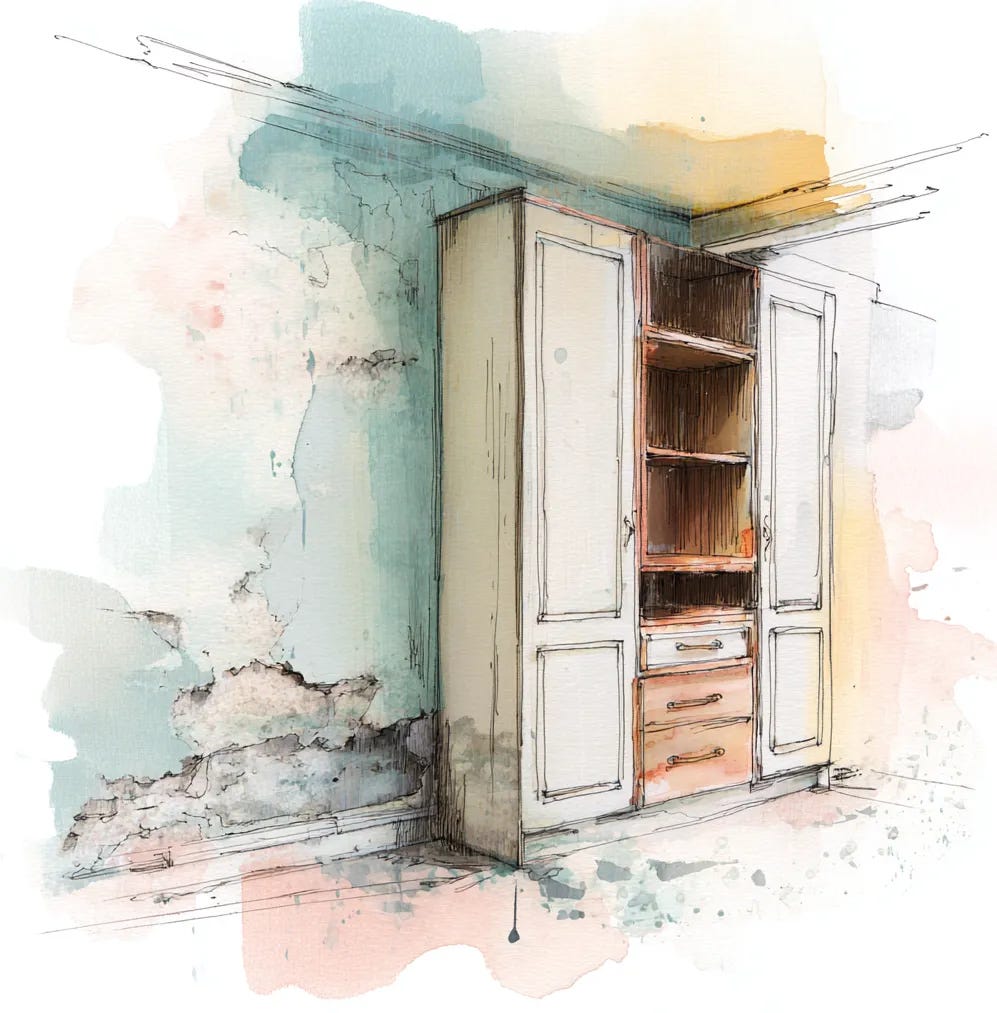
You come across it constantly, behind wardrobes, around windows, under floors, inside cupboards, behind fresh plaster, even in brand-new refurbishments.
And almost always, the response is some version of:
“Let’s Paint Over It.”
“We’ll Cut Out The Patch.”
“It’s Just Condensation, Open A Window.”
The problem is these responses treat the stain, not the system.
As both a landlord and a former tenant, I’ve seen this thinking from every angle.
And I was once a victim of it myself.
That level of sickness, the brain fog, fatigue, inflammation, and sense that something is deeply off in your body, is not something I would wish on anyone.
I’ve written more about my own mould exposure and health impacts here if you want the personal context here:
And in many cases, they make exposure worse.
The Moment Mould Shows Itself, it’s Already Late in the Story
Recently, we were involved in a client refurbishment. As soon as a layer of plasterboard came off, the reality was obvious.
Mould. Everywhere.
Hidden. Behind finishes. Completely invisible from the outside.
It made me wonder how the previous owners had felt living there, and how their health might have been affected without them ever knowing why.
Because I take mould extremely seriously on projects, testing happened immediately. Results showed very high indoor mould levels.
The response wasn’t cosmetic. It was systematic:
Affected Materials Stripped Back To Base Structure, With Full Protection For Anyone Doing The Strip-Out
Controlled Professional Remediation And Deep Cleaning
Whole-Home Dry Fogging As Part Of Decontamination
Fogging Again Just Before Move-In, After The Final Clean
Re-Testing To Confirm Improvement And Document Outcomes
Only then was anyone allowed to move in. More details about this process later.
That sequence matters, because mould is rarely a surface problem. And once it’s visible, it’s often well-established elsewhere.
This article is a practical guide to what mould actually is, why it forms, when testing helps, and what proper remediation really looks like. It’s written with UK housing in mind, but the principles apply everywhere.

Mould is a Moisture Problem, not a Surface Problem
Mould is a fungus. Its spores are microscopic and naturally present in outdoor air. When spores land on a damp, fibre-rich surface like dust, MDF, paint, wallpaper paste, plaster dust, timber, fabrics, they can germinate and form a colony.
If you can see mould with the naked eye, a colony has already formed.
Individual spores themselves are invisible. Mould produces a mix of biological by-products, including:
Spores
Fragments
Beta-glucans
Microbial Volatile Organic Compounds (mVOCs)
In Some Species, Mycotoxins Like Stachybotrys Chartarum
These particles are small enough to be inhaled and can irritate airways and mucous membranes.
Personally, I believe mould should be treated with the same seriousness as asbestos, not because every patch is catastrophic, but because dismissal is dangerous.
It’s also important to say this clearly that, not all mould is equally harmful.
Some species are far more toxic than others. This is why testing matters before tearing everything out blindly or spending money on unnecessary remediation.
Another critical point that’s often missed is that dead mould can still cause reactions. It doesn’t need to be alive to trigger inflammatory or allergic responses. Simply “killing” mould is not enough. Contaminated material needs to be removed.
“Black Mould” Isn’t One Thing
“Black mould” is often used as a catch-all phrase. In reality, it’s a visual description, not a diagnosis.
Dark staining can come from many mould species.
The one most people are referring to is Stachybotrys chartarum, often called “toxic black mold,” a species known to produce potent mycotoxins, specifically macrocyclic trichothecenes (such as satratoxins), which can cause severe health issues. So, not to be ignored.
Is Black Mould Dangerous?
Black mould exposure has been linked to a range of health effects, particularly:
Respiratory Symptoms
Asthma
Allergic Responses
Chronic Sinus Issues
Immune Suppression
Fatigue And Cognitive Symptoms In Some Individuals

Why Painting Over Mould Doesn’t Work
This is especially common in rented properties.
Paint, even “anti-mould” paint, can hide staining and slow surface regrowth. It does not solve:
Damp Substrates
Hidden Water Ingress
Cold Surfaces Driving Condensation
Ventilation Failures
Often, it seals moisture in. You get a neat wall with a more established colony behind it, continuing to affect air quality and health for years to come.
Why Cutting Out “Just the Affected Patch” Often Fails
If mould appears in one spot, it usually means:
Moisture Exists Beyond What You Can See
Spores And Fragments Have Already Migrated
The Visible Patch Is The Symptom, Not The Source
Cutting out a small square without investigating cavities, floor voids, skirtings, and service penetrations is one of the most common reasons mould “comes back”. It also risks spreading spores during disturbance if containment isn’t handled properly.
The Bleach problem, and Why DIY Can Make Things Worse
Bleach is still one of the most commonly suggested “solutions” online. Bleach can decolour mould. It does not reliably treat growth within porous materials.
More importantly, scrubbing and spraying can agitate mould, triggering the release of spores and fragments into the air. Combine that with bleach VOCs and you can actively worsen indoor air quality.
If you DIY, think containment and removal, not “wipe and hope”.
Buying or Renting, Testing as a Screening Tool
This is something most people miss, and I wish more people did it.
If you’re viewing a property, moving into a refurbishment, or experiencing unexplained symptoms, basic home testing can be useful as a screening tool.
A sensible approach:
Outdoor Reference Sample (Baseline)
Indoor Samples In Priority Rooms
Compare Indoor Results Against Outdoor Context
Outdoor air is used as a reference because spores are naturally present and vary with season and weather.
Home kits have limitations so use them as a signal, not a verdict. If something flags, escalate to professional inspection and sampling.
Just the headline alone scares me. Never mind the visual!